
I‘m sitting here in the study, with the heating on and a strong wind blowing outside. Merlin cat (now 18 years old) has been out in his condominium for the past hour, but I had to bring him in as it was threatening to rain. (Merlin had been trained on our Freedom Fence, but because of his white ears and love of sunbathing, I had to come up with a way of keeping him safe, not only from traffic, but also from skin cancer. I found the perfect solution in an Omlet cat run, which he loves. It has a roof to keep out the elements, plus adjustable panels to act as windbreaks. Over the summer he has spent up to seven hours a day outside, with a bed, food and water. Even now, with the dark mornings, he’s sitting at the porch door as soon as we get up, demanding to go outside. Now I have to manage his expectations carefully and I wonder how we are going to cope with him during the winter. He’s always loved being outside).
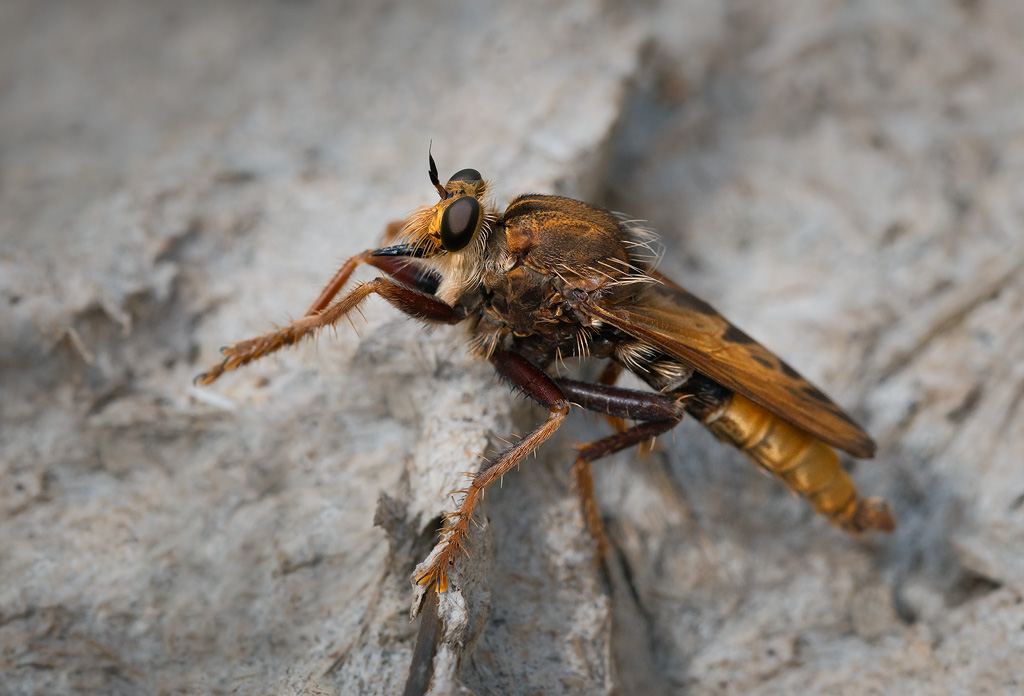
It’s a feeling I can understand, having spent more time at the reserves this year, taking lots of photographs and discovering bugs I never knew existed. My previous blog post was about scorpion flies, but there were so many more fascinating insects. One was the hornet robberfly, which I discovered by chance on a butterfly group. The group administrator mentioned a couple he had seen on his local patch and I expressed an interest. He sent me a map reference and I set out to look for them the following day.
The reference obviously covered a large area and my husband clearly thought I was mad. I must admit that when I finally reached the middle of an enormous meadow, that was my opinion too. For nearly an hour I zig-zagged across the path with no joy. Then I decided to use my head, remembering that hornet robberflies are the UK’s largest insect. They are predators, sitting on stones or piles of dung, waiting to ambush smaller insects such as dung beetles, bees and grasshoppers. I needed to find where the prey was likely to hang out and spotting an area with more flowers about twenty yards away, I headed over to look. I found my first one almost instantly and after that, they were pretty easy to spot. There were still only a handful of individuals, but they seemed to confine themselves to an area only ten yards square.
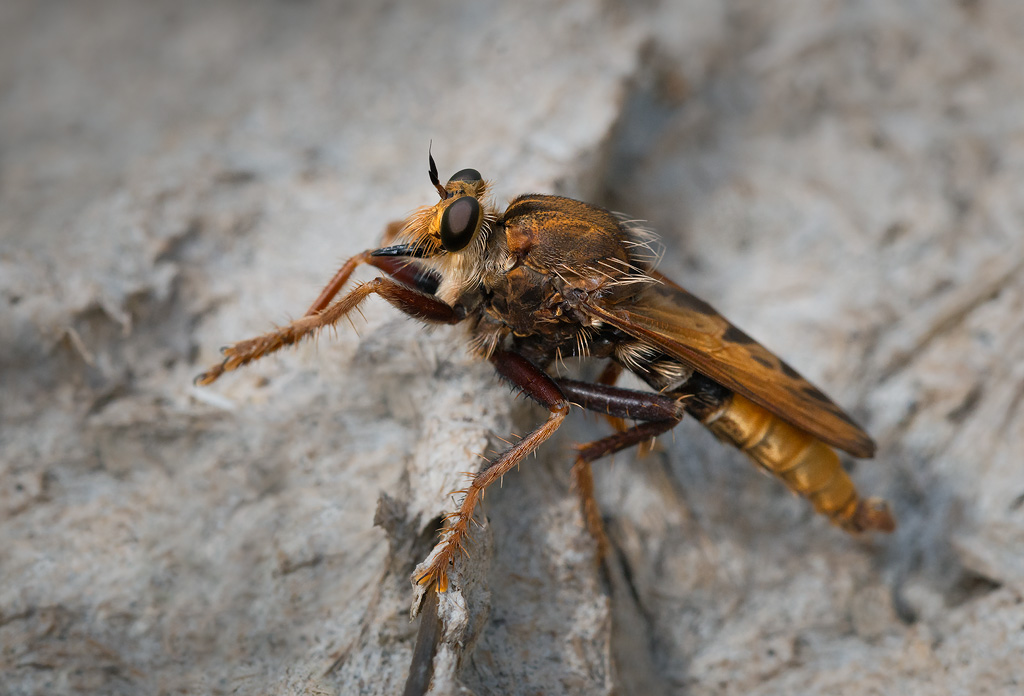
They weren’t easy to photograph, but eventually, I found one on a clear background and managed to creep up undetected. The hornet robberfly is on the UK’s list of endangered species and is now only found in parts of Wales and southern England. I feel honoured, not only to have seen some, but to have been able to get close enough to take the photograph featured above. If my knees are up to the task, I will be visiting them again next year.

Sid
25 Sep 2019It is a big, dangerous fly! And ugly 🤪
But the shot is beautiful.
Ciao
Sid
P.S.: that Omlet cat run is very interesting. Thanks for the info 😁
Zooey
26 Sep 2019Haha… I don’t see him as ugly. In fact I find his golden beard quite stunning. He’s probably handsome to another hornet robberfly. I’m glad you like the cat run. Merlin used to have access to all of our 2.5 acres. He would even go in our fields and let the llamas touch him. Now he can’t manage the fence and wants to sunbathe in the garden all day. He already has a tiny black spot on one of his white ears, in spite of the fact we only let him out mornings and evenings in the summer. The run is perfect. I set a timer and check him hourly and bring him in every couple of hours to use the litter tray if he wants. He’s out there at the moment 🙂
Sid
26 Sep 2019Yes! Outside is lovely this late September: warm sun and mild weather 🙂
Llamas! How many have you now? They are so cute.
Have a wonderful day!
Sid
Zooey
26 Sep 2019We have two llamas and four goats in the fields. (Eleven cats and six ferrets indoors). You have a wonderful evening too my friend 🙂